Designing a News Experience for an Always-On World
People are consuming more news than ever and trusting it less. That was the uncomfortable starting point — and the reason this project felt worth doing.

Duration
3 month
My role
Lead UX Designer: discovery, North Star vision definition, and high-fidelity prototype
Design team
Lead UX Designer: (me), UX Designer, UX Consultant
Domain
Media, digital entertainment
The Starting Point
When I joined, the industry problem was well understood but rarely tackled properly: news fatigue was real, attention was fragmented, and broadcasters were competing for reach on platforms they didn't control.
The question wasn't how to deliver news faster or add more features. It was how to make news feel intentional again.
My job was to define a North Star vision — something that could align two very different sets of expectations. On one side: global media companies wanting a scalable, multi-tenant platform. On the other: users who wanted relevance, clarity, and some say in how news fit into their day.
Understanding the Problem Space
Before sketching anything, I worked with an Experience Consultant to understand why existing news products struggle to build lasting habits. We reviewed more than 70 news apps across five regions — looking for patterns in how people actually engage with news, not for design inspiration.
What stood out:
The strongest products position themselves as everyday destinations, not topic-specific tools.
Video and audio are often the first touchpoint, not an add-on.
News gets consumed in short bursts throughout the day, rarely in long focused sessions.
AI is starting to show up in ways that help users keep up rather than fall further behind.
That shifted the framing from content delivery to experience design.

Vision, Principles & Execution
The North Star came down to one idea: the product should adapt to people, not the other way around.
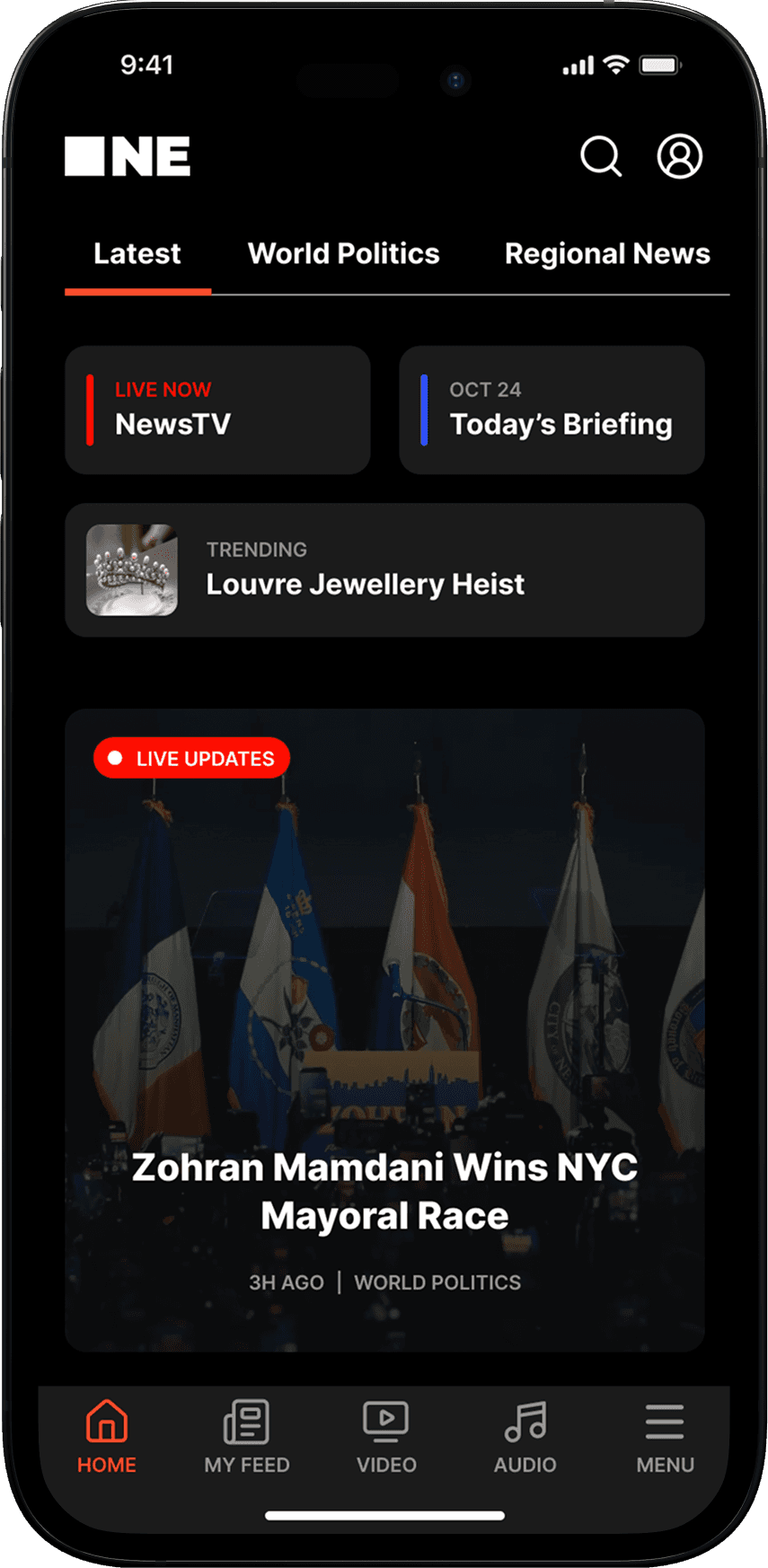
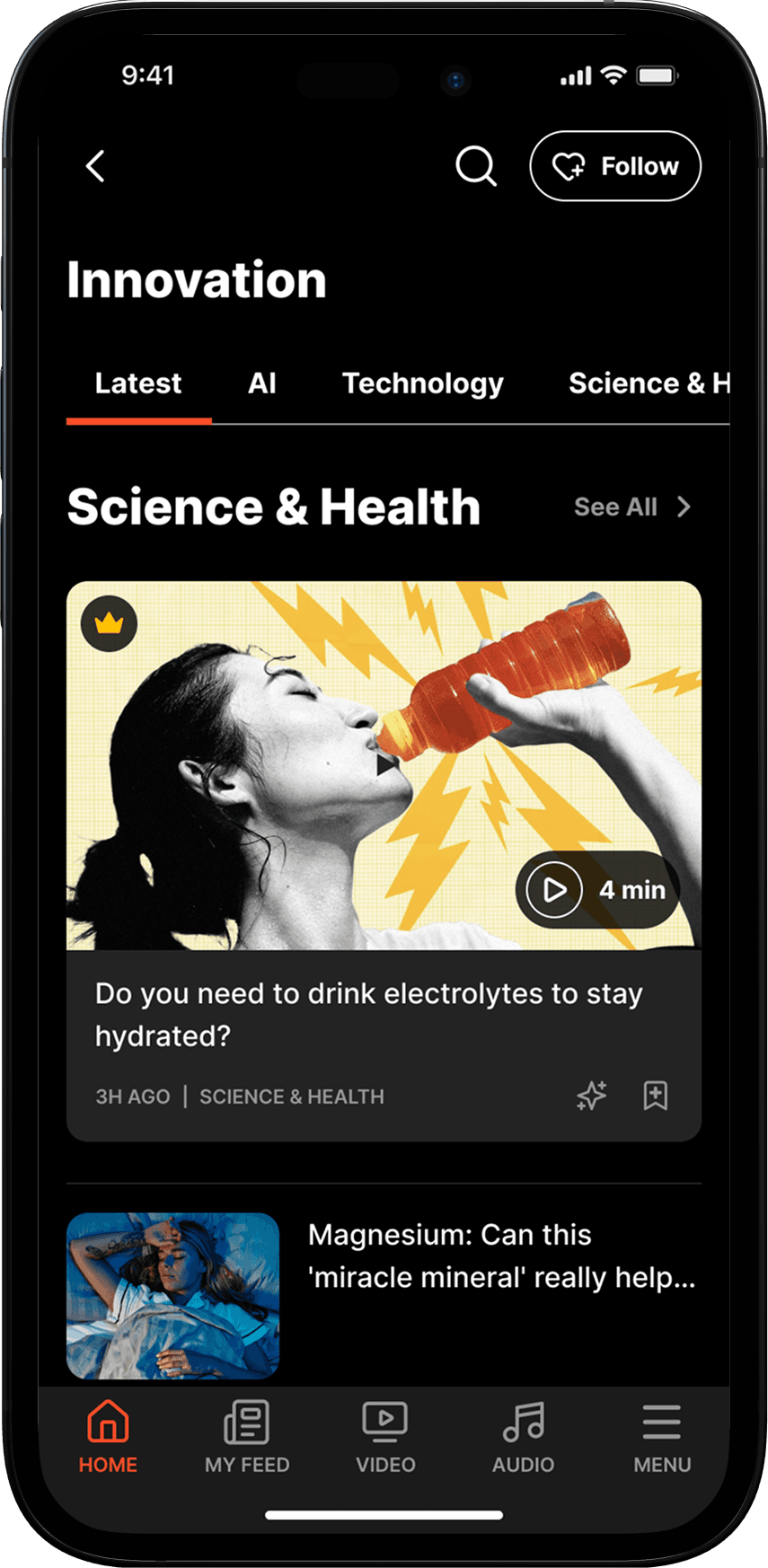
Rather than a fixed layout, the interface shifts to match the content — a breaking news article, a podcast, a video show. One platform, many formats, each one feeling native to what you're in.
Three principles brought this to life:
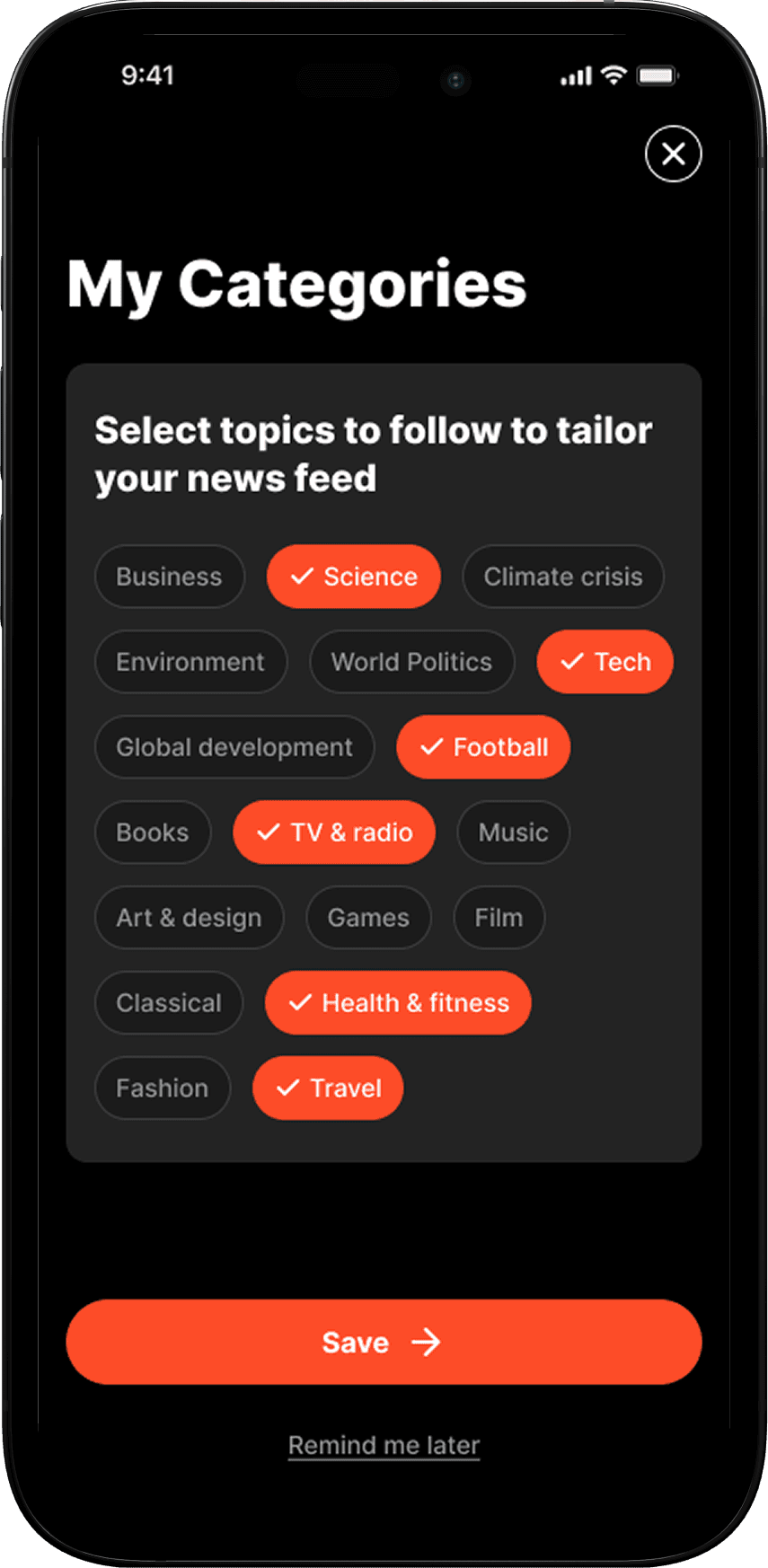
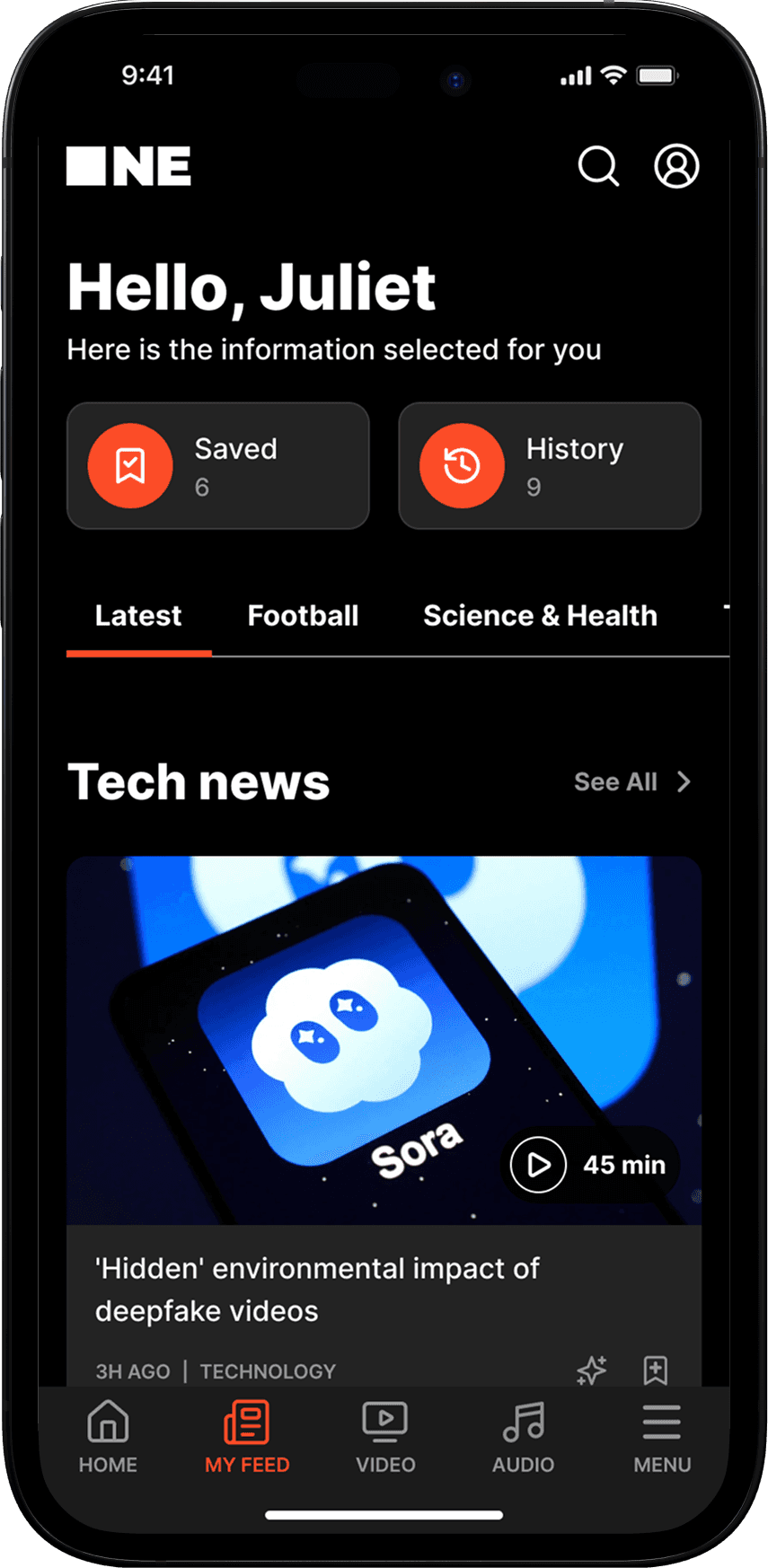
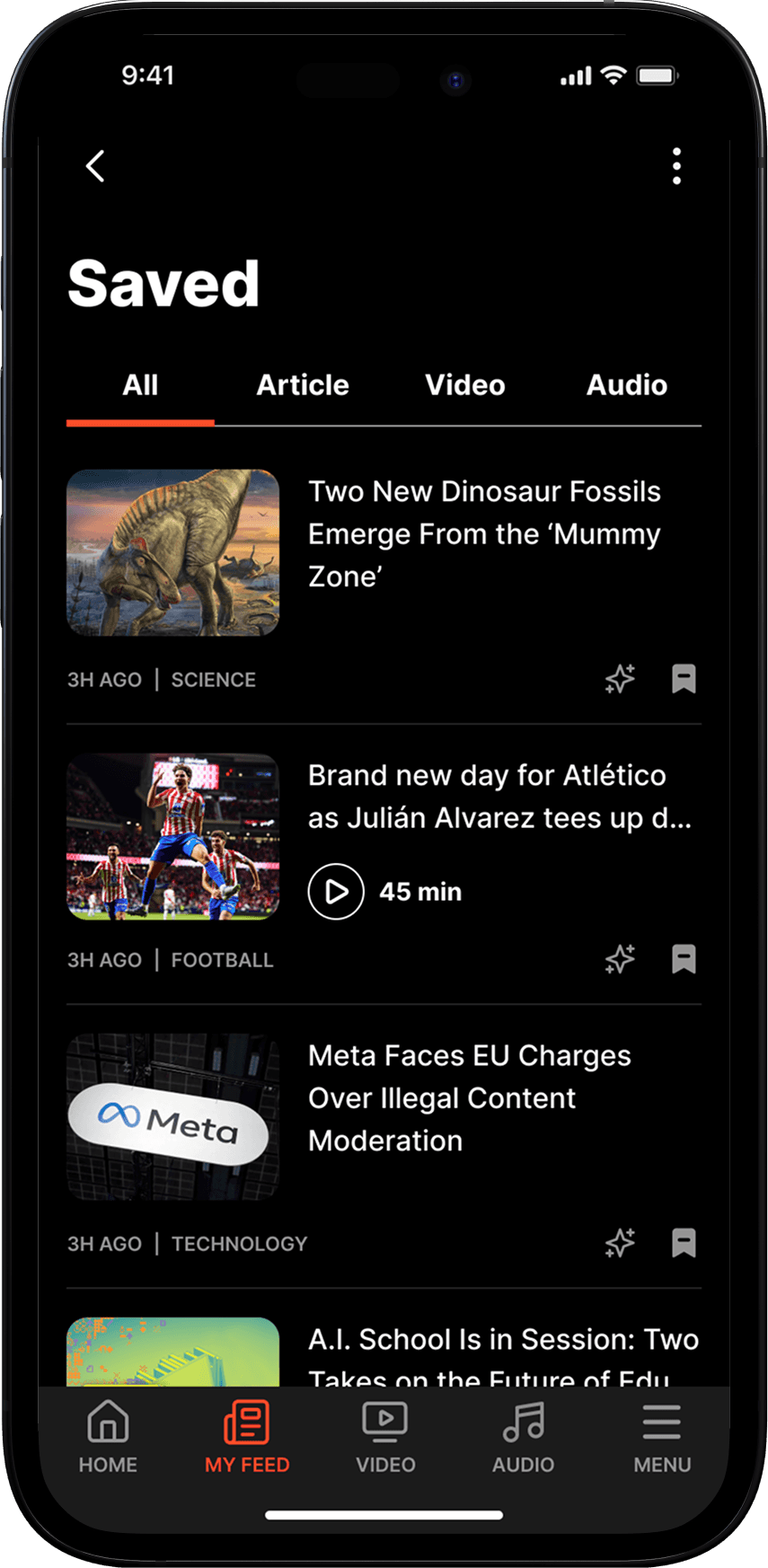
Personalization drives habit — a feed that remembers what you follow and where you left off.
Multimedia as a foundation, not a feature — video-first exploration with editorial clarity, not algorithmic chaos.
AI as a quiet assistant — summaries and text-to-speech for the commute, not a chatbot front and center.
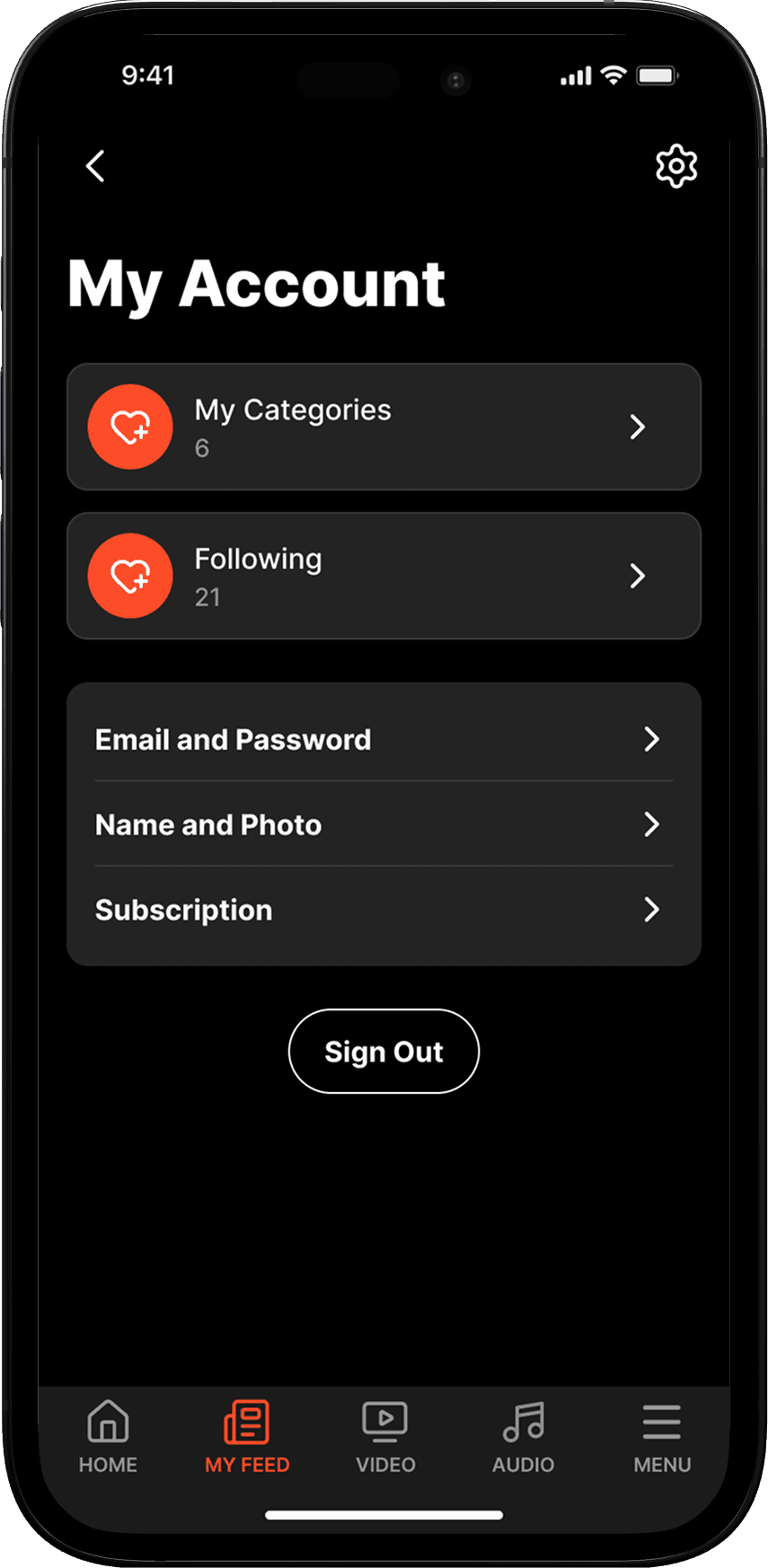
To make it tangible, I built a 57-screen high-fidelity prototype. Stakeholders could click through it, feel the interactions, and debate specifics instead of concepts. That prototype ended up being the most important thing I produced.
Working With Scale and Constraints
The platform was designed as a white-label product for multiple media clients with different brands, audiences, and editorial priorities. Early pressure was to customize everything per client.
I pushed back. A fully fragmented platform would be impossible to maintain or scale. Instead I proposed an 80/20 model: 80% stays consistent across all tenants — core flows, interaction patterns, information architecture. The remaining 20% gives each brand room to express its own identity through tone, hierarchy, and visual language.
Not an easy sell initially. But once people could experience it working in the prototype, it clicked.
Results & My Contribution
Before the client conversations, I ran usability sessions with 12 participants — news consumers with different habits. Some things held up, others didn't survive first contact. A few assumptions I was fairly confident about turned out to be wrong, and the prototype changed as a result.
The vision was sold to a client, directly supporting the decision to move the initiative forward. For a North Star project, that's the measure: not a shipped product, but a shared direction people are willing to invest in.







What I Took Away
When there's no live product, no metrics, and no users to test with, what convinces people is clarity of thinking and something they can actually experience. The prototype did work that no presentation deck could.
Defending the 80/20 model reinforced something I keep coming back to: the right system decisions aren't always the ones people immediately want. But when you can show the reasoning and let people feel the outcome, the conversation tends to shift.